
One of Louisiana’s oldest living communities
Who the Houma Are
The Houma are an Indigenous people of Louisiana whose history in the lower Mississippi River region predates European settlement by centuries. Long before Louisiana had parishes, borders, or city names, the Houma lived along rivers and bayous that shaped how they moved, farmed, traded, and survived.
Today, the Houma are not a historical footnote. They are a living community, organized as the United Houma Nation, with deep roots in south Louisiana.
Homeland and Geography
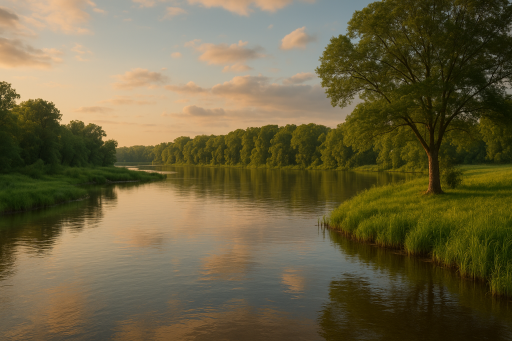
Early historical records place the Houma along the lower Mississippi River, in areas that would much later become part of southeastern Louisiana. Like many Native peoples of the Gulf South, their settlements were closely tied to water.
Rivers and bayous were not obstacles — they were infrastructure.
The Houma chose locations that balanced:
- Access to fishing and freshwater
- Fertile land for agriculture
- Natural transportation routes
As colonial pressure increased, Houma communities gradually moved southward, eventually establishing a strong presence in Louisiana’s coastal parishes. It’s important to note that modern parish boundaries did not exist during this period; Houma homelands followed land and water, not survey lines.
Language and Cultural Roots
Scholars generally classify the Houma as a Muskogean-speaking people, linking them linguistically to other Native nations across the southeastern United States.
This shared language family helps explain similarities in:
- Agricultural practices
- Social organization
- Trade networks
At the same time, the Houma developed their own local identity shaped by the Mississippi River and Louisiana’s unique environment.
Lifeways and Economy
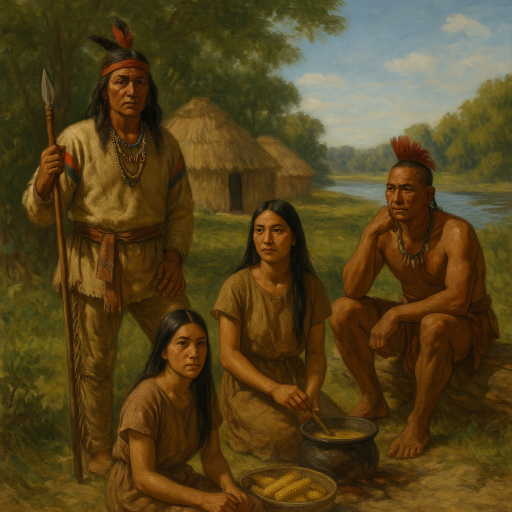
The Houma economy was diverse and adaptive. It typically included:
- Fishing in rivers, bayous, and wetlands
- Hunting game in surrounding forests
- Agriculture, especially corn, beans, and squash
- Trade with neighboring Native groups
Seasonal movement was common, reflecting changes in water levels, weather, and available resources. Canoes were essential tools, allowing travel and trade across large distances with relative ease.
This river-based way of life would later influence how the Houma interacted with European settlers, who relied heavily on Native knowledge to navigate Louisiana’s landscape.
Relationships With Other Tribes
The Houma did not live in isolation. They interacted regularly with neighboring Native groups, including the Bayougoula, with whom they shared — and sometimes disputed — hunting territories.
One such territorial boundary, marked by a tall pole stained red, was observed by French explorers in 1699. That boundary marker would later give Baton Rouge its name: le bâton rouge — “the red stick.”
This marker was not symbolic decoration. It represented authority, territory, and rules that were already understood long before Europeans arrived.
First European Contact
French exploration brought the Houma into written history near the end of the 17th century. Explorers such as Pierre Le Moyne d’Iberville documented Native communities along the Mississippi River, recording territorial markers, settlements, and lifeways they encountered.
These early records did not mark the beginning of Houma history — only the moment it entered European documentation.
Disruption and Survival
Like many Indigenous peoples, the Houma faced severe disruption following European contact. Disease, colonial conflict, and shifting alliances destabilized long-standing communities across the region.
Rather than disappearing, the Houma adapted.
Over time, they relocated southward, maintained cultural continuity, and remained active participants in Louisiana’s evolving economy. Their survival was not accidental — it was the result of resilience, adaptation, and deep knowledge of the land.
The Houma Today
The Houma people continue to live in Louisiana today, primarily in the southern part of the state. The United Houma Nation represents one of the largest Native communities in Louisiana and was recognized by the state in 1977.
The Houma story is not just about the past. It is part of Louisiana’s present.
Why the Houma Matter to Louisiana
Understanding the Houma helps explain:
- Why early Louisiana settlements followed rivers
- How Baton Rouge got its name
- Why Native presence in Louisiana never truly vanished
They are part of the foundation on which modern Louisiana was built — culturally, geographically, and historically.
Sources and Further Reading
(Draft list – to be formalized in v2)
- Louisiana Endowment for the Humanities (64 Parishes)
- Smithsonian Institution / Bureau of American Ethnology
- State and parish library collections
- Early French colonial records summarized by later scholars