
Lake Palourde
Overview
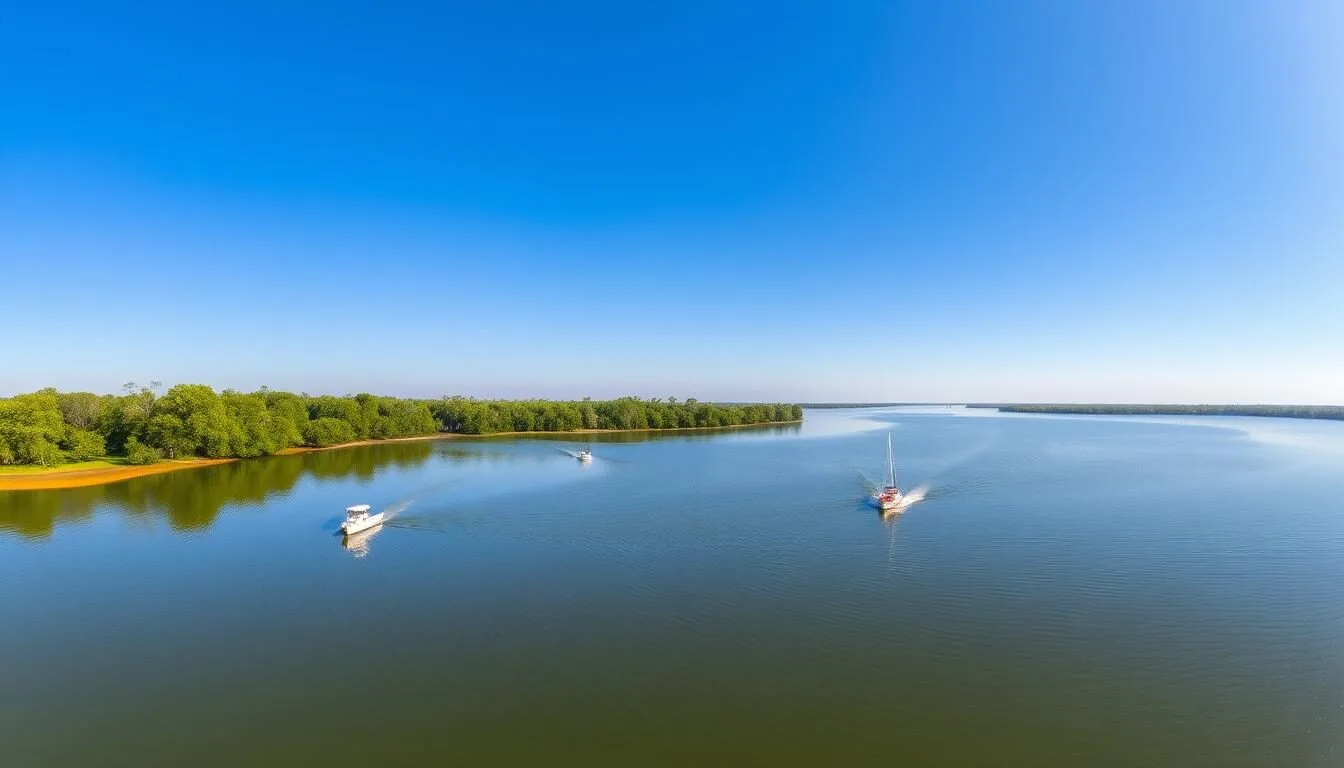
Lake Palourde is a natural oxbow lake located in south-central Louisiana, primarily within St. Mary Parish, with portions extending into Assumption Parish. The lake was formed when a former channel of the Mississippi River was cut off from the main river course, leaving behind a crescent-shaped body of water characteristic of oxbow lake formation.
Lake Palourde represents a southern example of the Mississippi River’s historic channel migration and provides important geographic context for understanding floodplain development in this part of Louisiana.
Geographic Context
Lake Palourde lies west of the modern Mississippi River channel within the Mississippi River Basin. The surrounding landscape consists of low-lying alluvial terrain shaped by centuries of flooding, sediment deposition, and river movement.
The lake is situated near the Atchafalaya region, placing it at a geographic transition point between the lower Mississippi River floodplain and the broader coastal plain of southern Louisiana.
Formation as an Oxbow Lake
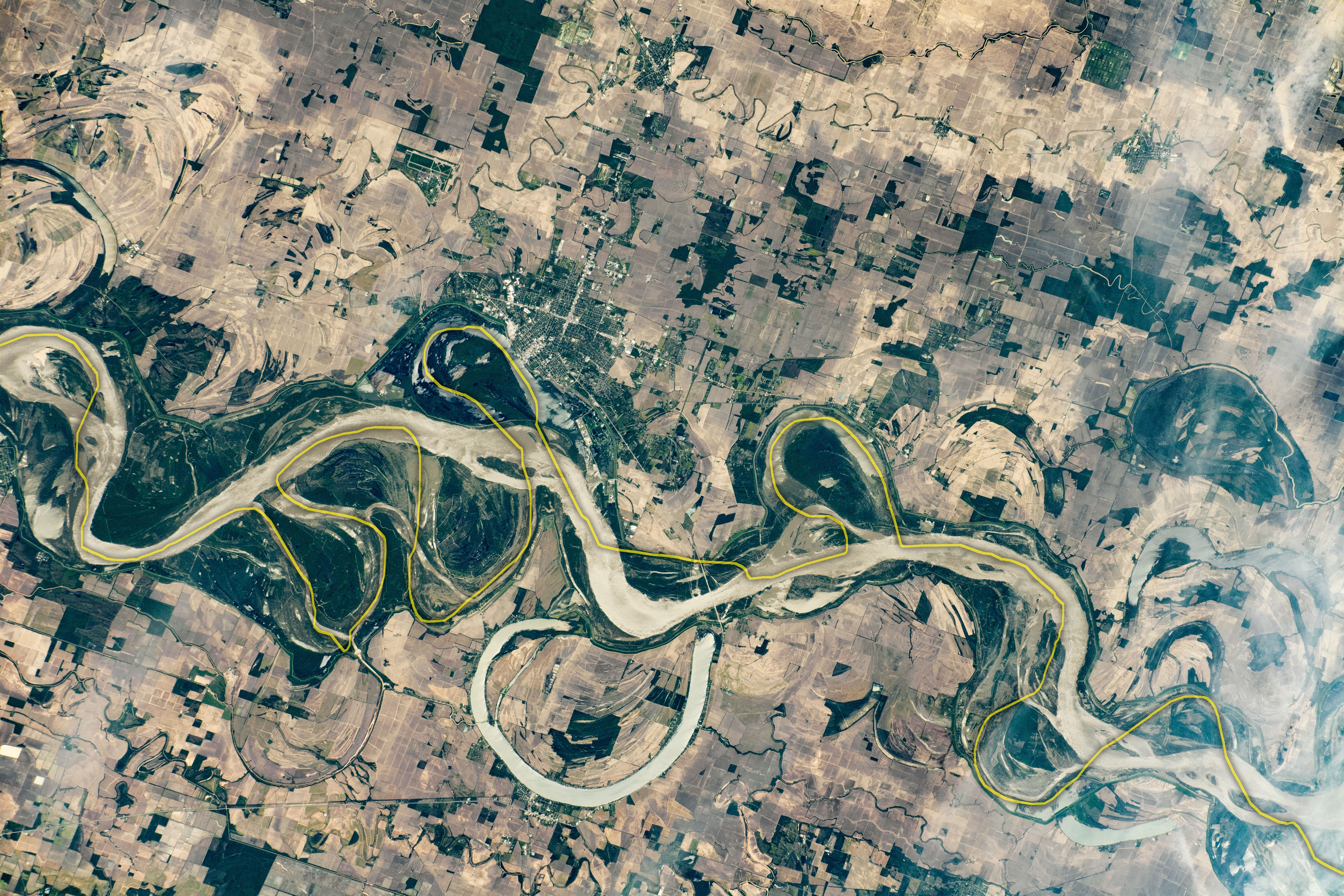
Lake Palourde formed when the Mississippi River abandoned a meander loop and established a shorter, more efficient course. Over time, sediment sealed the former river channel at both ends, isolating it as a standing body of water.
This natural cutoff process occurred repeatedly along the Mississippi River prior to modern river control and levee construction, leaving behind oxbow lakes such as Lake Palourde across Louisiana’s floodplains.
Relationship to the Mississippi River
Although no longer directly connected to the Mississippi River’s active channel, Lake Palourde remains historically and geographically tied to it. The lake preserves evidence of the river’s former path and illustrates the scale of channel migration that once occurred across south-central Louisiana.
Lake Palourde also helps illustrate how Mississippi River floodplain features extend beyond northeastern Louisiana into the lower portions of the state.
Ecological Characteristics
As an oxbow lake, Lake Palourde supports freshwater ecosystems adapted to still or slow-moving water. Historically, such lakes provided habitat for fish, aquatic vegetation, and wildlife associated with floodplain environments.
The lake continues to support local biodiversity and plays a role in recreational and environmental use within the surrounding region.
Human Settlement and Use
Human settlement around Lake Palourde developed in close association with fertile floodplain soils and access to freshwater. The lake influenced agricultural practices, settlement patterns, and land use in what are now St. Mary and Assumption parishes.
Over time, Lake Palourde became an important local feature for fishing, recreation, and regional identity.
Modern Relevance
Today, Lake Palourde remains significant for:
- Recreation and fishing
- Local water use
- Agricultural context
- Interpretation of Mississippi River floodplain history
The lake stands as a visible reminder of the Mississippi River’s historical mobility and its role in shaping Louisiana’s landscape.
Disclaimer on Sources and Interpretation
While we strive to present accurate and well-supported information, portions of Louisiana’s early geographic, environmental, and cultural history are reconstructed from archaeological evidence, historical records, and scholarly interpretation. Readers are encouraged to consult multiple sources, including differing or contradictory accounts, to gain a fuller understanding. Ongoing research continues to refine our knowledge of Louisiana’s landscapes and history.
Related Parish65 Articles
- Mississippi River
- St. Mary Parish
- Assumption Parish
- Oxbow Lakes of Louisiana (Coming Soon)